Nepal's Youth See Impacts of Climate Change in Daily Life

Climate change in Nepal will increase extreme weather events such as floods, heat and landslides. Young people want to take action to reduce the effects of climate change.
Dizziness, headaches, weakness. Inability to sleep, trouble concentrating on schoolwork. Nisha Kumari Yadav, 16, knows what extreme heat feels like.
"I once fainted because of the heat," says Yadav.
When the temperatures rise above 42 degrees, local authorities decide to close schools in Biratnagar, southeast Nepal.
"When that happens, we try to stay out of the heat, in the shade, and drink lots of water. You do not have the energy to do anything outdoors," Yadav explains.
Climate change brings heat and floods

Climate change is affecting people's lives, health and livelihoods in many ways in Nepal. In Nisha Yadav's home region, climate change is raising temperatures and prolonging hot spells. With no air-conditioning, people cannot escape the heat, even at night.
In Biratnagar, people are used to the annual floods, but climate change is altering the timing and frequency of monsoon rains in an unpredictable way. The rains used to come in June and July, but now the flood season has changed. In 2024, the worst floods in years hit the region in September and October.
More information on climate change
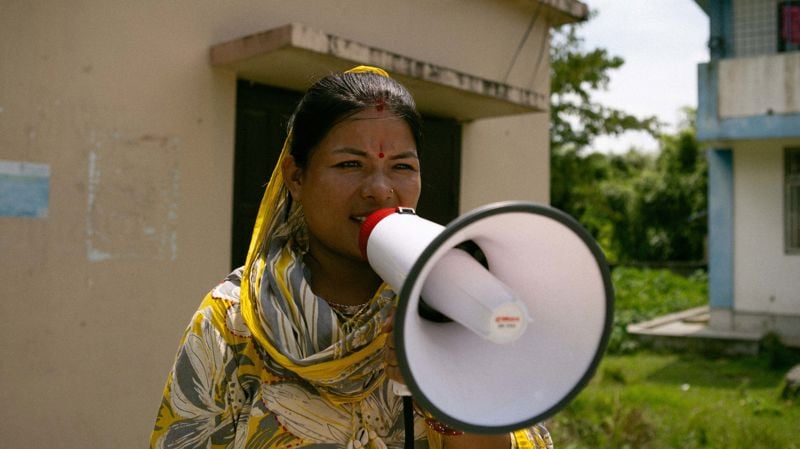
Around forty villagers sit on an orange tarpaulin – men on one side, women and children on the other. Nisha Kumari Yadav, wearing a Red Cross shirt, stands in front of them.
Yadav is the president of the Red Cross youth club at her school. She is sharing information about climate change in a village near the school, its effects and how villagers can protect themselves from its impacts.
"I received training on climate change from the Red Cross. By sharing my knowledge, I can help people prepare for the future. For example, I show them how to protect their belongings and to evacuate if a flood is approaching."
Life-threatening landslides are increasing

The steep stairs to the school's annex have been reinforced with cement with the help of the Nepal Red Cross Society. A majestic view opens up from the science classroom's yard above. Massive landslides regularly cut across the slopes. The moving mass of earth takes with it everything in its path: homes, fields and roads.
"Our region is at very high risk of landslides. They occur every year near my home. This year's landslides have not yet occurred. No one knows exactly when they will start and how difficult the season will be," says 17-year-old Samikshya Gurung.
Samikshya Gurung goes to school in Phalelung, in the easternmost part of Nepal. She is also the president of the Red Cross youth club at her school.
Climate change is making landslides worse. The soil begins to move during heavy rainfall. Human actions also play a role in the background, as altering the land for roads, fields and buildings increases the risk of landslides. The most valuable, large trees, which bind the soil with their roots, have also been felled from the slopes.
"It is wrong that people are allowed to cut down trees. If I see people chopping down trees on the slopes, I go and tell them not to do it. I will say something, even if they get angry and shout at me," Gurung says firmly.

Young people are worried about the future
"I fear that in the future temperatures will rise so high that people will not be able to go outside. At its worst, the heat is already unbearable. I am concerned about the sort of future that we will have in 20–30 years' time," says Nisha Yadav.
Both young volunteers want to play their part in tackling the effects of climate change.
"Even if we cannot stop climate change completely, we must take action to reduce its effects. I cannot do everything on my own, but I can pass on information. The information I share can save someone's life, and that is why I want to keep up the work," says Samikshya Gurung.
The Red Cross helps communities adapt to the impacts of climate change
- The Nepal Red Cross Society is working to reduce and prepare for the effects of climate change. Among other things, the Red Cross strengthens protective structures in areas prone to floods and landslides in collaboration with local communities.
- Volunteers and schoolchildren organise information sessions in communities and make home visits, for example to elderly and disabled people, to raise awareness about the impacts of climate change and ways to prepare for them. The Red Cross also supports the livelihoods of the poorest families so that they have a better chance of coping with the devastation caused by disasters.
- The Red Cross is developing early warning systems to inform people of an impending flood or landslide risk in time. With the help of warnings, people will know to protect themselves and their property.
The Finnish Red Cross supports these efforts with funds from the Disaster Relief Fund and the Ministry for Foreign Affairs of Finland.

Text: Minttu-Maaria Partanen
Communications Specialist