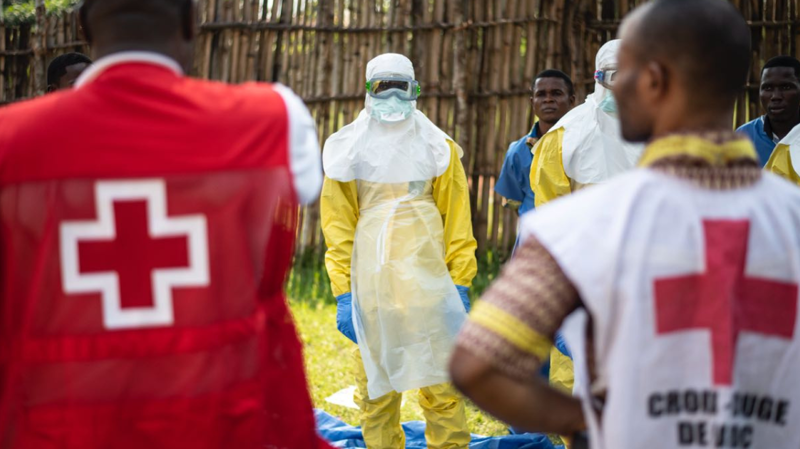
Finnish Red Cross helps fight Ebola in Burundi

The Ebola epidemic that started in the eastern parts of the Democratic Republic of Congo (DRC) threatens to spread beyond the country's borders into the neighbouring region. The Finnish Red Cross is supporting preparedness in neighbouring Burundi.
The Finnish Red Cross is contributing 200,000 euros from its Disaster Relief Fund to support the work of the Burundi Red Cross in response to the Ebola epidemic.
The Burundi Red Cross is training volunteer teams to share information, monitor the epidemic situation and provide psychosocial support. Work is being carried out in all 18 provinces, but the focus is on the areas near border crossings.
If the epidemic spreads to Burundi, information on how the Ebola virus is transmitted, how to detect symptoms and how to prevent the spread of the virus needs to be shared quickly.
“The right information is essential to stopping the epidemic. There is no vaccine or targeted treatment for the currently circulating form of the virus, which is why it is important for communities to detect outbreaks early and know how to act. To make this possible, the local Red Cross is preparing to gather information on rumours and concerns circulating in the communities and respond to them quickly,” says the Finnish Red Cross’s Director of International Operations Tiina Saarikoski, who has previously worked in Ebola operations.
Conflicts in the region increase the risk of contagion
The Finnish Red Cross has also supported the fight against Ebola in the Democratic Republic of Congo. In October last year, 400,000 euros were allocated to the operation of the International Federation of the Red Cross and Red Crescent Societies (IFRC) from the Disaster Relief Fund. In addition to sharing information, the operation will improve monitoring of the epidemic and help bury the dead safely to avoid further infection.
Those displaced by conflicts in the region are particularly vulnerable as the epidemic spreads. When people have to move from one place to another, the disease spreads easily. Crowded living conditions, limited health services, lack of information on how to prevent infections and poor access to hygiene increase the risk of infections.
Health workers and people caring for their sick loved ones are also at risk. Among the first to die in the outbreak were three volunteers from the Red Cross of the Democratic Republic of Congo who were infected while helping others before news of the outbreak had reached the region.
“In the epidemic area, special attention will be paid to the safety of volunteers and workers to ensure that aid reaches those who need it most. The operation will train volunteers on Ebola routes of transmission and protection, provide the necessary protective equipment and psychosocial support," Saarikoski says.