What is the International Red Cross and Red Crescent Movement?

The International Red Cross and Red Crescent Movement is the largest humanitarian movement in the world. It differs from other humanitarian operators in one significant way: our internationally recognised aid network has a permanent presence almost everywhere in the world.
The International Red Cross and Red Crescent Movement operates in 191 countries. In addition to its size, what makes the movement special is that the countries of the world have recognised the role of the Red Cross and its right to help people as part of the Geneva Conventions.
When disaster or crisis strikes, the local Red Cross or Red Crescent can help people in need quickly. In a crisis situation, assistance can also be requested from the international movement: the International Federation of Red Cross and Red Crescent Societies (IFRC), other national societies and the International Committee of the Red Cross (ICRC).
International Committee of the Red Cross (ICRC)
The committee helps vulnerable people, especially in war and conflict zones by:
- working to protect and help victims of war
- acting as an impartial mediator to ensure, among other things, the delivery of humanitarian aid
- supervising the treatment of prisoners of war and others in need
- looking for missing people
- promoting the implementation of humanitarian law and the Geneva Conventions.
International Federation of Red Cross and Red Crescent Societies (IFRC)
The International Federation is responsible for action in the event of natural disasters and for cooperation between national societies by:
- providing and coordinating disaster relief
- developing disaster preparedness
- promoting health
- promoting the principles of the movement
National Red Cross and Red Crescent Societies
More than 16 million volunteers are involved in the operations of national Red Cross and Red Crescent societies, which have around 80 million members. Almost every country has a national Red Cross or Red Crescent society – like the Finnish Red Cross. The societies are members of the International Federation, but independent organisations.
The national societies operate in different ways according to local needs, but they are all guided by the principles of the Red Cross and Red Crescent Movement. The purpose of the Finnish Red Cross, for example, is to:
- help the vulnerable
- promote health
- maintain disaster preparedness
- support and assist public authorities to promote people's wellbeing
In addition to these, the Finnish Red Cross has a special role to play, especially in organising the blood service and promoting first aid skills in Finland.
Read more about the work of the Finnish Red Cross in Finland here
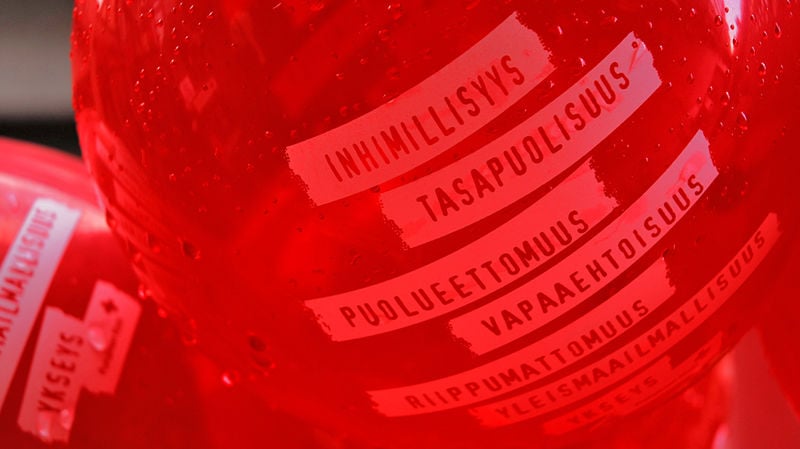
The principles of the Red Cross