Tsunamis

A tsunami means a series of waves generated by strong movement of the sea floor that can cause immense damage. Tsunamis destroy houses, infrastructure and vegetation over distances of up to several kilometres.
A tsunami is typically caused by an earthquake, but it may also be caused by a volcanic eruption, the collapse of large earth and ice masses or the impact of a large meteorite in the ocean.
A tsunami will cause the water mass of the sea to move over its entire depth, while the effect of normal wind waves is limited to the upper layer of the water. A tsunami has enormous force. It can carry objects weighing several tonnes.
Earthquakes cause tsunamis
Most often, tsunamis are caused by earthquakes, particularly in the subduction zones of tectonic plates. In an earthquake, a tectonic plate will pop up rapidly and lift the water mass above it. The launch of the water mass causes a tsunami, proceeding in all directions.
Tsunamis can occur in all ocean areas around the globe. The wave can move at a speed of up to 800 km/h in the deep sea area. However, the wave height is only a few centimetres to one metre, meaning that the wave is not detected on ships, for example.
As the tsunami reaches the shore, the shallow seabed makes the front of the wave slow down. This causes the water coming from behind to compress over the front, increasing the height of the wave. Tsunami wave heights can reach up to 30 metres on the coastline. Waves often also hit the shore in succession, with the time between each wave being up to several hours.
Tsunamis destroy houses and infrastructure
Tsunamis can cause large numbers of deaths. In the Indian Ocean tsunami in 2004, approximately 226,000 people died, and the tsunami in Japan in 2011 took the lives of approximately 20,000 people.
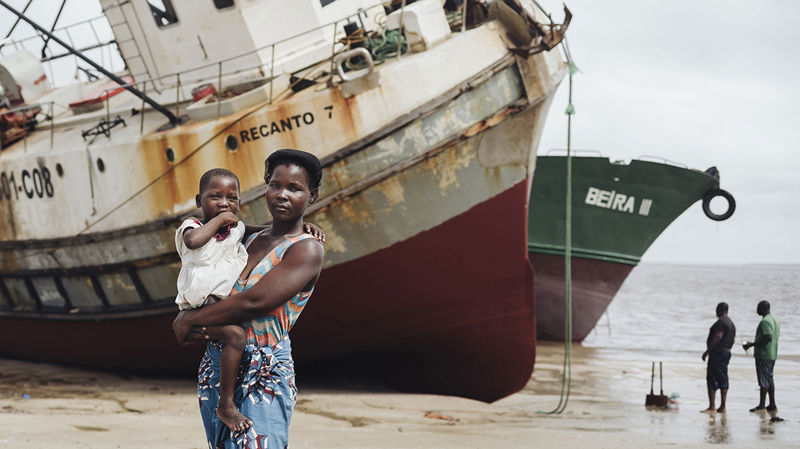
Tsunami waves destroy houses, infrastructure and vegetation over distances of up to several kilometres and can carry large objects, such as ships and cars, inland. The wave will also wreak havoc as it recedes. Seawater brought in by the tsunami can cause salinisation of farmland and groundwater.
The Red Cross helps with tsunami preparedness
The Red Cross
- supports the authorities in the operations of the advance warning systems. In the Pacific and Indian Oceans, automated measurement instruments record earthquakes in the seabed and sea level variations. The equipment can be used to detect a tsunami in the open sea and issue a tsunami warning
- helps the authorities to build protective structures, such as tsunami walls in coastal cities
- trains volunteers to respond to disasters, e.g. by issuing early warnings and evacuating areas
- teaches first aid skills to volunteers.
The Red Cross helps when tsunamis strike
The Red Cross
- provides emergency aid to tsunami victims, such as food, water, shelter and emergency accommodation
- provides medical treatment and medical supplies
- offers psychosocial support to tsunami survivors and those who have lost their families
- helps people find missing loved ones
- helps with rebuilding after disasters.

Development cooperation