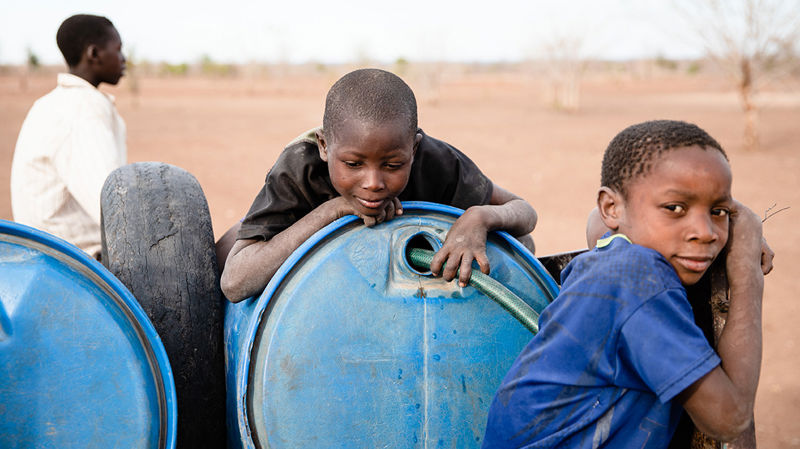
Development cooperation by the Red Cross – what is it like?

We help people in fragile states prepare for the extreme conditions brought on by climate change and strengthen the operational capacities of local organisations in crises.
Our development co-operation is increasingly focusing on fragile states. These countries are often encountering multiple simultaneous crises, such as long-term conflicts, the effects of climate change and collapsed social structures and services.
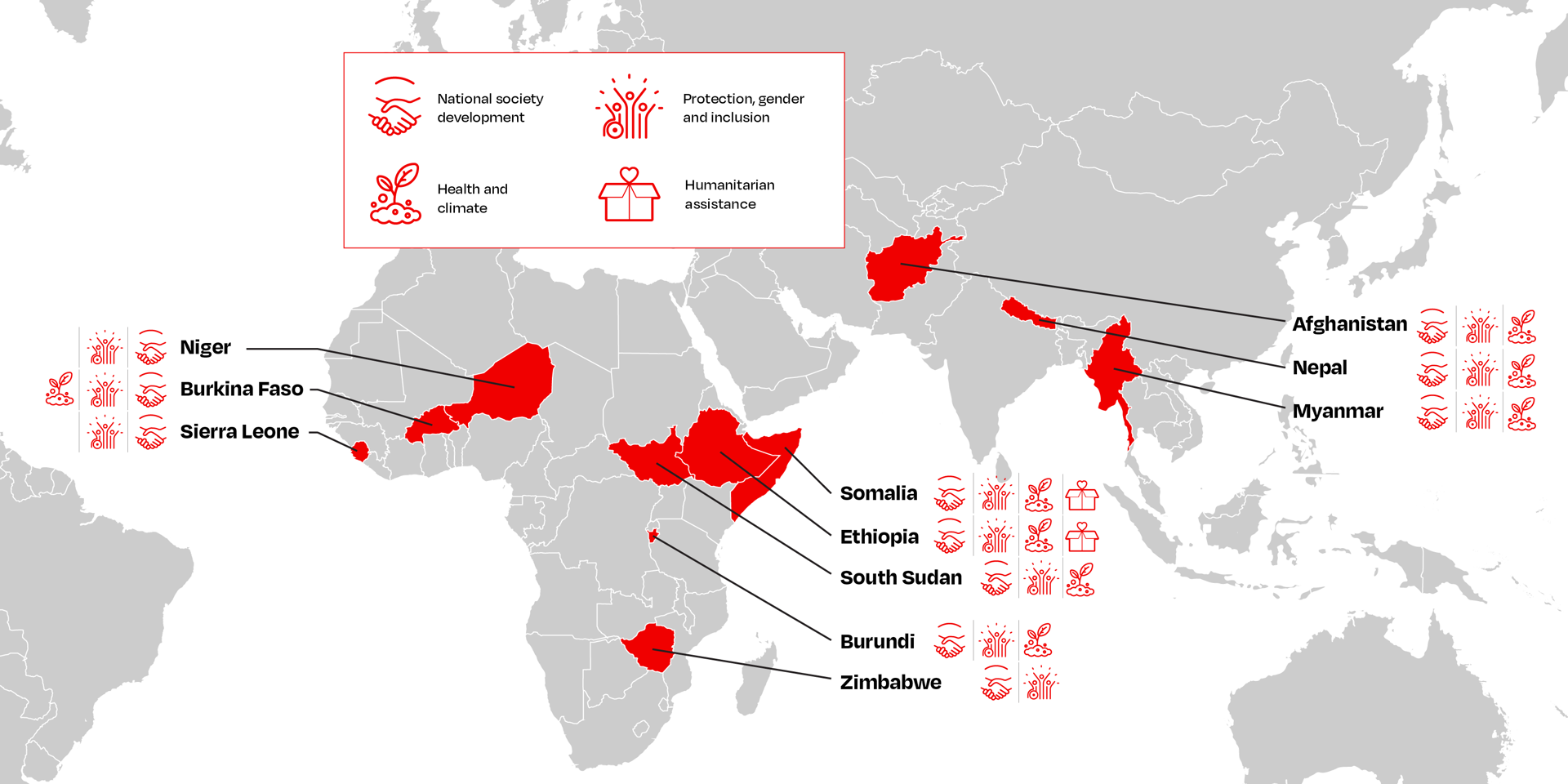
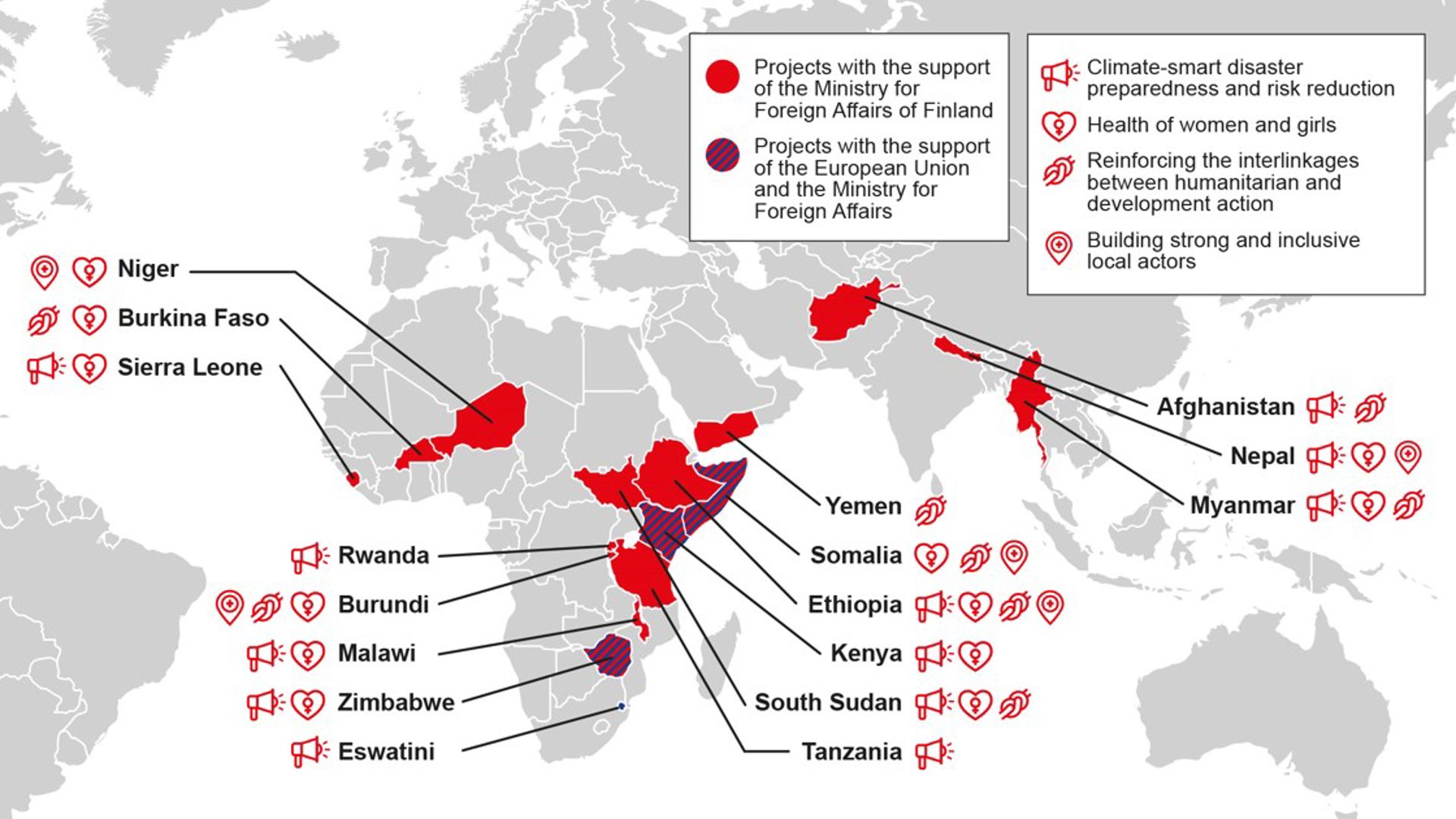
In our four-year development co-operation programme started in 2026, we work in 11 different countries, eight of which are in Africa and three in Asia. We also steer humanitarian aid to many of these countries. Our development co-operation programme is funded with the support of the Ministry for Foreign Affairs of Finland and our donors. In our work, we emphasise the coordination of humanitarian aid and development co-operation so that it supports the preparedness of local communities to respond to crises.
Our development co-operation focuses on four main themes.
1 We strengthen the capacity of local organisations
Crises, conflicts and disasters have a local impact. This makes it vital for local operators to be able to act quickly and effectively in different situations. We support the local Red Cross and Red Crescent societies in work such as strengthening their position, finances and operations and increasing their number of volunteers. The stronger the local societies are, the more sustainable our development co-operation is.
2 We promote human value, protection and equality
Our work is based on the idea that humans all have the right to be protected and heard, regardless of their background, identity or abilities. We promote the competence of our local partners in protection and equality. We help local societies strengthen women’s participation and female leadership at all levels. Working together with our partners, we reduce and prevent sexual and gender-based violence and harmful traditions. We promote the social inclusion and rights of people with disabilities.
3 We strengthen preparedness for climate change and health risks
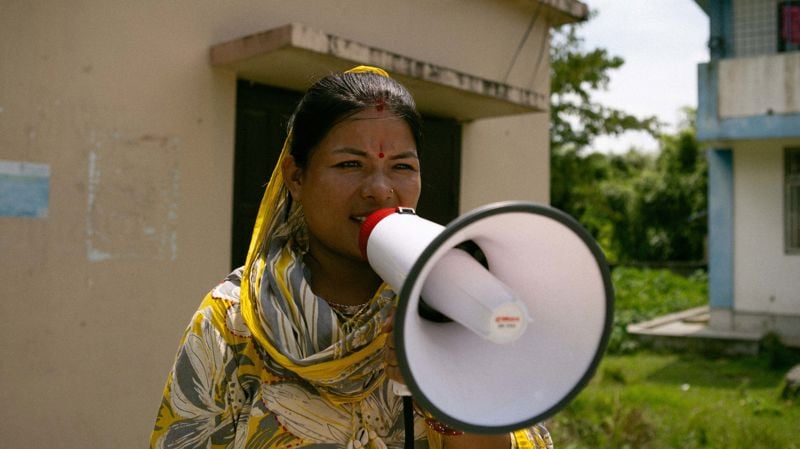
With our partners, we support preparing for the impacts of climate change, for example by supporting the advance warning systems of authorities. These systems allow people to protect their property and themselves when a disaster strikes. Volunteers trained by local organisations lead evacuation drills, serving as an important network in ensuring the functionality of the advance warning systems. Our partners help communities adapt to the extreme conditions brought on by climate change by e.g. diversifying income opportunities and promoting climate-proof farming practices.
We strengthen our partners’ healthcare services to allow them to better respond to the health impacts of climate change, such as increased communicable diseases, heat and hurricanes. Availability of potable water, sanitation and washing facilities must be secured in the midst of crises. Trained volunteers will share information about hygiene and can notice the warning signs of potential disease epidemics.
We promote sexual and reproductive health services and rights in healthcare systems. In particular, we are supporting our partners in improving the access of women and children to healthcare in fragile states. We are improving the menstrual hygiene of girls to prevent their schooling from being interrupted due to menstruation.
4 We provide humanitarian aid
With our support, our partners provide humanitarian aid that saves human lives and helps recovery after crises and disasters. We pay attention especially to the needs and protection of people in the most vulnerable positions. We are building a basis for a long-term development to allow people to prepare for crises and recover from them faster. We guide humanitarian aid to countries suffering from multiple simultaneous crises, such as Somalia, Ethiopia, Burkina Faso and Myanmar.
The Finnish Red Cross is a partner of the European Commission's Humanitarian Aid and Civil Protection department (ECHO). EU Humanitarian Partnership Certificate 2021-2027 (PDF).
The development cooperation of the Red Cross promotes the Sustainable Development Goals of the United Nations.
Development cooperation